
The Secret is in the Bones
Let me tell you about my first prime rib. I was so nervous. I thought such a fancy roast needed a magic touch. But the secret is simple. It’s all about the bones.
You take the meat off, then tie it back on. Those bones are like a little rack. They lift the meat and let heat move all around. This matters because it helps the fat melt slowly. That makes the meat juicy and tender all the way through.
Patience Makes Perfect
This recipe asks for patience. You salt the roast days before cooking. Then you put it in the fridge. I know, waiting is hard. But trust me.
The salt has time to work deep into the meat. It seasons every single bite. This step matters more than any fancy spice. It builds flavor from the inside out. Do you have a family recipe that asks you to wait? What is the hardest part for you?
A Slow and Gentle Heat
We cook this roast low and slow. Just 200 degrees. It feels wrong, doesn’t it? Such a big piece of meat in such a cool oven. But it’s right.
The gentle heat cooks the meat evenly. No dry, gray edges. Just perfect pink from side to side. *Fun fact: This method is sometimes called “reverse searing.” You cook it first, then get the crispy crust at the end!* I still laugh at that. My grandson calls it the “backwards roast.”
The Final Crispy Touch
After hours of waiting, we get to the fun part. The broiler! We prop the roast up and let the heat blast the fat cap. Doesn’t that smell amazing?
Watch it closely. In just a few minutes, the top turns golden and crackly. That crispy fat is the best part. It’s like the prize for being patient. What’s your favorite crispy part of a roast? The ends of a ham or the skin on a chicken?
Resting is Not Waiting
You must let the meat rest. Take it out and cover it loosely. Let it sit for a full half hour. I know, everyone is hungry. But this is important.
Resting lets the juices settle back into the meat. If you cut it right away, all those good juices run onto the cutting board. Then you get dry meat. After all that work, we want every drop of flavor to stay right where it belongs.
Your Turn at the Table
Carving is easy once the strings are off. Slide the meat away from the bones. Then slice it thick. Sprinkle each piece with a little coarse salt right before serving.
That last pinch of salt makes the flavor pop. It’s a special meal for a special day. Who will you make this for? Tell me about your favorite holiday dinner memory. I love hearing your stories almost as much as I love sharing mine.
Ingredients:
| Ingredient | Amount | Notes |
|---|---|---|
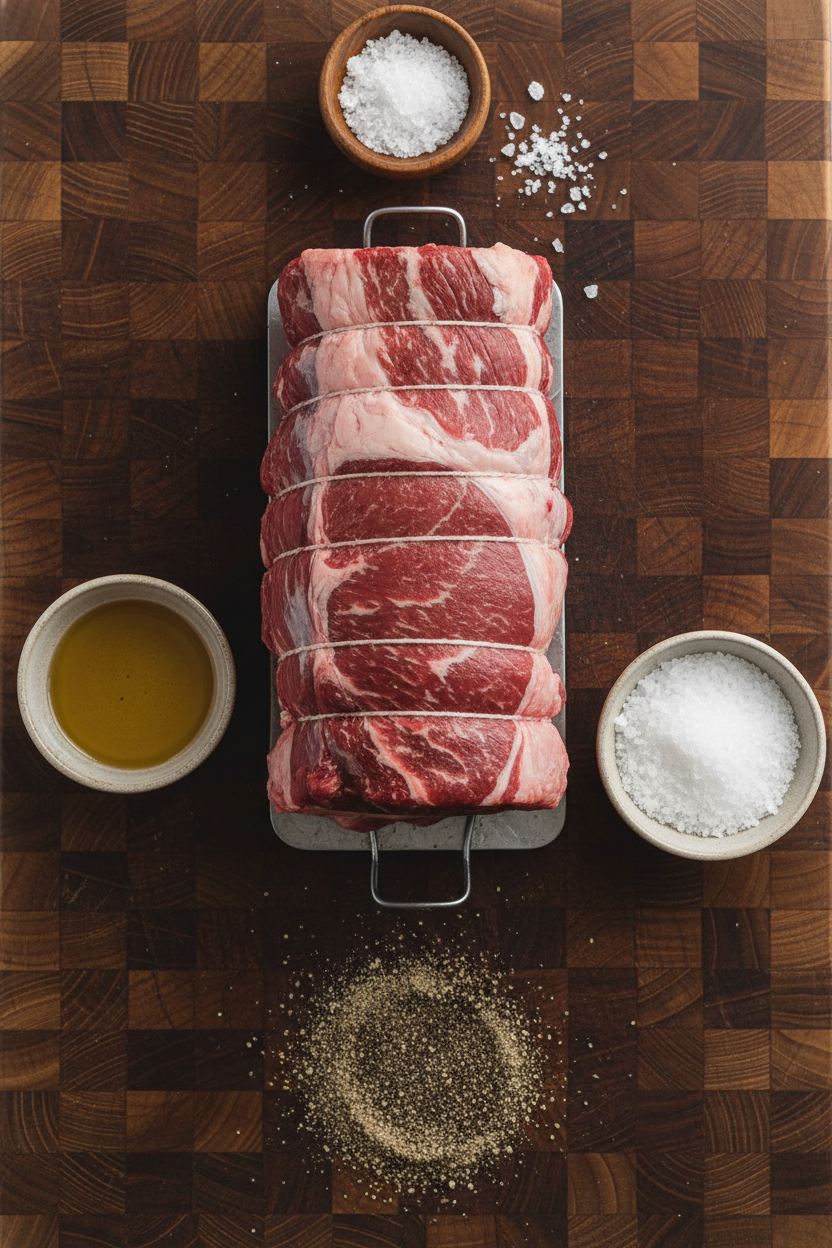
| first-cut beef standing rib roast (3 bones) | 1 (7-pound) | Meat removed from bones, bones reserved |
| Kosher salt and ground black pepper | To taste | For seasoning |
| Vegetable oil | 2 teaspoons | For searing |
| Kosher salt (for salting the roast) | 2 tablespoons | For the dry brine |
| Coarse salt | To taste | For serving |
The Cozy Secret to a Perfect Holiday Roast
Hello, my dear. Come sit at the table. Let’s talk about a special dinner. A prime rib roast feels like a big hug on a plate. It is a celebration meal. I remember making my first one for my husband’s birthday. I was so nervous. But the secret is simpler than you think. It is all about patience and a little salt. Doesn’t that smell amazing when it roasts? It fills the whole house with warmth.
We will take our time. This recipe asks you to plan ahead. That is the cozy secret. You season the meat and let it rest in the cold for a day or more. This makes the flavor deep and wonderful. I still laugh at that first time. I forgot to tie the roast back to the bones. What a funny dance that was. But we will do it right together. Here is how we make magic.
Step 1: First, we free the meat from its bones. Use a sharp knife and go slow. Keep those bones. They are our flavor friends. Then, make little cuts in the fat on top. This helps the salt get in. (Hard-learned tip: Ask the butcher to remove the bones for you. It saves time and worry!).
Step 2: Rub a good amount of salt all over the roast. Get it into those little cuts. Then, place the meat right back on its bones. Put it on a plate in your fridge. Leave it uncovered. Let it sit there for one to four days. This is the planning part. It makes the meat taste incredible.
Step 3: On cooking day, heat your oven very low. We want it at 200 degrees. Then, we give the roast a quick sear in a hot pan. Brown the sides and top nicely. This gives us a beautiful color. It only takes a few minutes. Listen for that happy sizzle.
Step 4: Let the meat cool a bit. Then, tie it back onto the bones with kitchen string. This helps it cook evenly. Now, place it on a rack in a pan. Season it with pepper. Roast it low and slow for hours. What do you think makes the meat so tender? Share below!
Step 5: When the thermometer says 110 degrees, turn the oven off. Do not open the door. Let the roast sit inside. It will keep cooking gently. This is the magic trick for perfect doneness.
Step 6: Take the roast out and let it rest. Cover it loosely with foil. Let it sit for at least half an hour. This keeps all the juicy goodness inside. Patience is a virtue here.
Step 7: Finally, we crisp the top. Use your broiler for just a few minutes. Watch it closely. It will get golden and delicious. Then, slice, sprinkle with a little coarse salt, and serve. You did it.
Cook Time: 4–5 hours
Total Time: 24+ hours (includes salting time)
Yield: 6-8 servings
Category: Dinner, Holiday
Three Tasty Twists for Your Table
This recipe is a wonderful classic. But sometimes, a little change is fun. Here are three simple ideas to play with. They make the meal feel new again. I love trying a new twist each year. It keeps my family guessing.
Herb Garden Crust: Mix chopped rosemary and thyme with soft butter. Rub it all over the roast before it goes in the oven.
Spicy Coffee Rub: Use fine coffee grounds, brown sugar, and a pinch of cayenne pepper instead of just salt.
Garlic & Mustard Glaze: Paint the seared roast with a mix of Dijon mustard and minced garlic before the slow roast.
Which one would you try first? Comment below!
Setting Your Beautiful Table
Now, for the finishing touches. A great roast deserves great company on the plate. I like to keep things simple. Let the meat be the star. A pile of creamy mashed potatoes is a must. They are perfect for the juices. Some roasted carrots or green beans add a lovely color.
For drinks, a glass of rich red wine pairs beautifully. For the younger folks, a sparkling apple cider feels just as festive. Pour it into a nice glass. It makes everyone feel special. Which would you choose tonight? Now, gather everyone. A meal like this is meant to be shared with stories and laughter.
Keeping Your Prime Rib Perfect
Let’s talk about leftovers. They are a happy thing. Slice any extra meat before you store it. Wrap slices tightly in foil or plastic.
They will keep in the fridge for three days. For longer, freeze them in a sealed bag. They can stay frozen for two months.
To reheat, let slices come to room temperature. Warm them gently in a low oven with some broth. This keeps them juicy and tender.
I remember my first big roast. I made far too much for two people. But we ate delicious prime rib sandwiches all week.
Batch cooking like this matters. It turns one big effort into many easy meals. It is a gift to your future, busy self.
Have you ever tried storing it this way? Share below!
Simple Fixes for Common Hiccups
First, a roast that is not brown enough. Do not skip the final broiling step. It makes the fat beautifully crisp and tasty.
Second, meat that is overcooked. Use a thermometer. Trusting time alone is tricky. I once guessed and served a well-done roast by mistake.
Third, meat that is not salty enough. That long fridge salt rub is key. It seasons deep down, not just on the surface.
Why does this matter? Fixing small problems builds your cooking confidence. And that deep seasoning makes every single bite flavorful.
Which of these problems have you run into before?
Your Prime Rib Questions, Answered
Q: Is this recipe gluten-free? A: Yes, it is. All the ingredients are naturally gluten-free.
Q: Can I make it ahead? A: You can salt it up to four days ahead. Cook it the day you want to serve.
Q: What if I don’t have twine? A: You can place the meat right on the bones. It might not sit as perfectly.
Q: Can I make a smaller roast? A: Yes. Just use the oven times as a guide. Always check with your thermometer.
Q: Any optional tips? A: Add fresh herbs like rosemary under the twine. *Fun fact: Rosemary grows like a weed in my garden!*
Which tip will you try first?
From My Kitchen to Yours
I hope you feel ready to try this special meal. It is simpler than it looks. Remember, good food is about sharing.
I love hearing your stories from the kitchen. Your successes make my day. Your questions help all of us learn.
Have you tried this recipe? Give your experience in the comments. I read every one. Thank you for cooking with me.
Happy cooking!
—Grace Ellington
Perfect Prime Rib Every Time
Description
Best Prime Rib
Ingredients
Instructions
- Using sharp knife, remove bones from 1 (7-pound) first-cut beef standing rib roast (3 bones), reserving bones.
- Cut slits in surface layer of fat, spaced 1 inch apart, in crosshatch pattern, being careful to cut down to, but not into, meat.
- Rub 2 tablespoons kosher salt over entire roast and into slits. Place meat back on bones (to save space in refrigerator), transfer to large plate, and refrigerate, uncovered, at least 24 hours and up to 96 hours.
- Adjust oven rack to middle position and heat oven to 200 degrees. Heat 2 teaspoons vegetable oil in 12-inch skillet over high heat until just smoking. Sear sides and top of roast (reserving bone) until browned, 6 to 8 minutes total (do not sear side where roast was cut from bone).
- Place meat back on ribs, so bones fit where they were cut, and let cool for 10 minutes; tie meat to bones with 2 lengths of twine between ribs.
- Transfer roast, fat side up, to wire rack set in rimmed baking sheet and season with pepper. Roast until meat registers 110 degrees, 3 to 4 hours.
- Turn off oven; leave roast in oven, opening door as little as possible, until meat registers about 120 degrees for rare or about 125 degrees for medium-rare, 30 to 75 minutes longer.
- Remove roast from oven (leave roast on baking sheet), tent loosely with aluminum foil, and let rest for at least 30 minutes and up to 75 minutes.
- Adjust oven rack about 8 inches from broiler element and heat broiler. Remove foil from roast, form into 3-inch ball, and place under ribs to elevate fat cap.
- Broil until top of roast is well browned and crisp, 2 to 8 minutes.
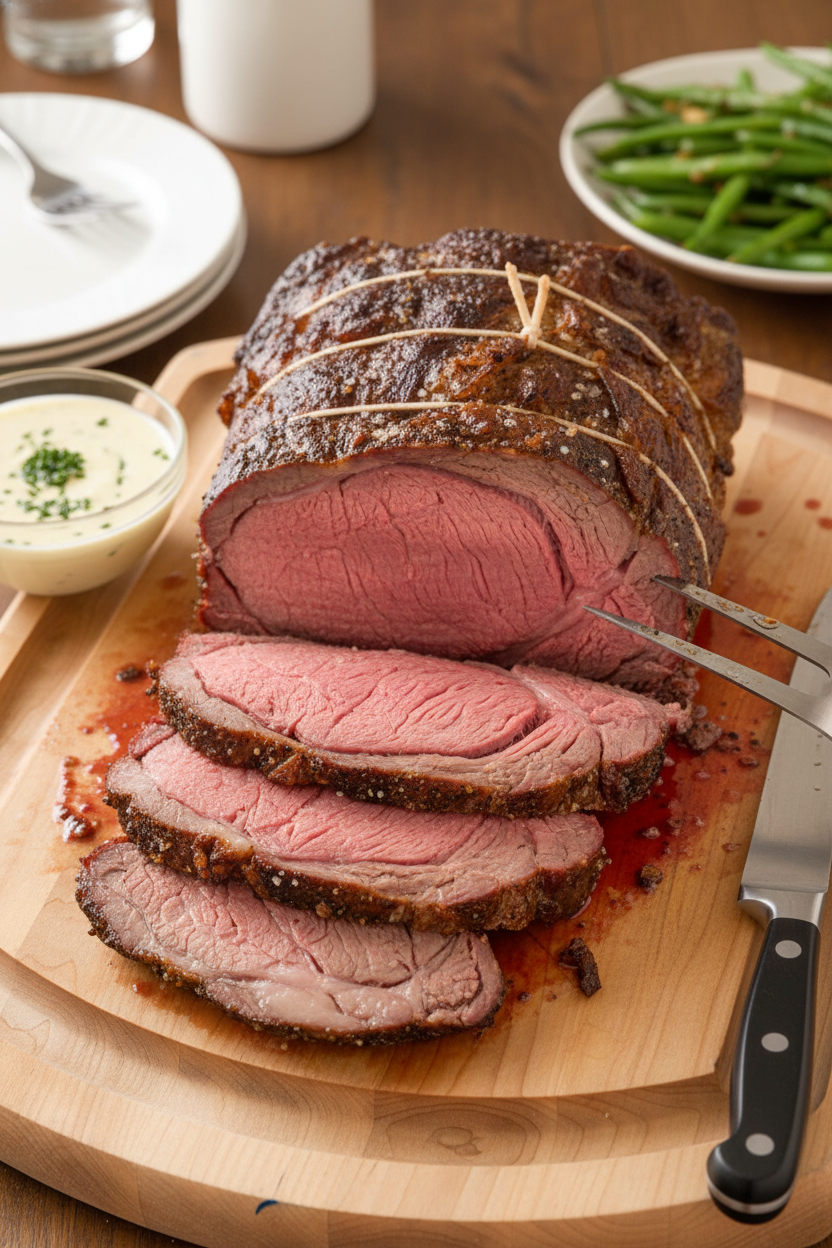
- Transfer roast to carving board; cut twine and remove roast from ribs. Slice meat into ¾-inch-thick slices. Season with coarse salt to taste, and serve.
Notes
- Ensure the roast is dry-brined in the refrigerator for the full time for the best flavor and crust. Use a reliable meat thermometer for accurate doneness.